Friday, October 22, 2010

Dinosaurs - Part 1

I was asked to do a post on dinosaurs and how they fit in with the Bible. This is a great topic suggestion since it is something that most Christians will wrestle with from time to time. It’s also a great topic since it automatically leads to discussions about the age of the earth, the sequence of evolution, and ultimately how ought we to read the creation story in Genesis.


To start, we need to acknowledge that dinosaurs once existed on earth. There is an overwhelming amount of fossil evidence that makes it foolish for us to think otherwise. To put things in perspective, there are over 1000 different species of dinosaurs that have been discovered and named. One of the largest collections of dinosaur fossils discovered is near Drumheller, Alberta in place called Dinosaur Valley. If you are ever in that area, you should plan to make a stop at the Royal Tyrell Museum.


So since they did exist, when did they exist? This is where many Christians start to squirm a bit in their seats. The common scientific claim is that dinosaurs roamed the earth about 230 million years ago, and died out after a massive meteor hit the earth about 65 million years ago (see the Sept 20, 2010 posting called Asteroid Collision). And when people date the age of the earth using the Bible, they typically come up with 6500 years. So something doesn’t add up.


A second troubling claim of science is that dinosaurs died out long before man appeared on the planet, around 100,000 years ago. That’s a huge gap of time that we can’t fit anywhere in the 6 day creation week.


So how do we reconcile these differences? That’s the BIG question isn’t it? God has revealed His truth in the Bible, but He has also revealed His truth in His Creation. They seem to be out of alignment – how do we bring them together?


I have found that there are three typical approaches that people take to this reconciliation. The first one is what I’ll refer to as the “Literal Bible” – people start with the position that the Genesis account of creation in 6 days of 24 hours each is irrefutable. This implies that dinosaurs were created during that week, and existed at the same time as humans. So, the dating methods used for determining when dinosaurs existed must be wrong. The fact that no dinosaur fossils have be found near human bones (or other mammal bones) is strictly a coincidence. There are oblique references to large animals found in the Bible (see Job 40:15-24 for a description of the behemoth, or Psalm 104:25,26 for the leviathan), and many attribute these to dinosaurs. Organizations such as Answers in Genesis have gone to great lengths to make science fit into the “literal Bible”. I applaud their efforts and their desire to provide alternative explanations for scientific evidence that fits into Biblical accounts. This works for many people, but not for me. I find they can alienate people in the scientific community by criticizing their work and dismissing what most scientists accept as factual information regarding things like the age of the earth. I also fear they may be making the same mistake the church made with Galileo regarding the scientific discovery that the sun does not orbit the earth but the earth orbits the sun. The church threatened Galileo with expulsion unless he recanted. Over 400 years later, the church admitted the scientific evidence was overwhelming and finally issued an apology. They accepted that the Biblical verses they originally felt were in contradiction with science were poetic and metaphorical, not scientific. But that event was one of the pivotal moments that started the breakdown in the relationship between the church and science. If we want to reach out to the scientific community and let them know that they can believe in God and still be scientists, I don’t think telling them that their basic assumptions are all wrong is a good starting point.


The second typical approach is at the other extreme end of the spectrum in what I’ll refer to as the “Liberal Bible” – people start with the position that science is essentially correct and that the creation account in Genesis is not meant to be taken literally. They use science to guide how the Bible ought to be read. If there appears to be a contradiction between science and a Bible verse, we shouldn’t take that Bible verse literally. So when the science tells us that the earth is billions of years old and formed over millions of years, this means the creation story in Genesis shouldn’t be taken literally. They argue that the creation story is presented in a format that gives us a pattern for how we should live our lives – work six days then have a day of rest. It’s not meant to be a play-by-play account of the process God used to create the universe. Basically, this group takes the opposite approach to the “literal Bible” group. Instead of making science fit into the Bible, they make Biblical accounts fit in with scientific evidence. Most of the people in this camp accept the earth is billions of years old, life started with single celled organisms and evolved into all other life forms we have today (including humans) over millions of years, a global flood never occurred (only a regional flood affecting a limited area), and dinosaurs died millions of years before humans were created. Many Christians are not comfortable with this approach since it allows science to direct how we should read the Bible, and in their eyes, it diminishes the mystery and power of God. There is the fear that as science continues to advance, the Bible becomes less relevant. Overall, this approach works better with people who have a scientific background, but doesn’t often build bridges with people who have traditional views about the inerrancy of the Bible.


So if these two extreme approaches don’t work for you, what approach can we take? That will be covered in the next post and here’s a hint – a Canadian quarter makes an appearance.


Questions and Comments?


  1. Have you had conversations with people about dinosaurs and the Bible? How did that go?
  2. Have you checked out Answers in Genesis or similar websites? What do you think of their approach?


Jac

Wednesday, October 13, 2010

Labels

Our society is obsessed with labels. We put them on everything – food, clothing, vehicles, and chemicals. Labels on things like food are a pretty good idea, especially if you have food allergies or dietary restrictions. But labels are useful only when two conditions are met – they must be accurate and they must be universally understandable.

Consider the danger if a food manufacturer left off a key ingredient for a breakfast bar – say peanuts – and someone bought the product assuming it was nut free and gave it to their child who had a nut allergy.

We put a lot of trust in labels, and we frequently make decisions based on what we understand a label to mean. Sometimes these decisions are literally life or death decisions.

The practice of labeling things has also extended to people. Individuals or groups of people are often referred to by a “label”. This could be based on what country they are from (American, German), the colour of their skin (white, black), their sexual orientation (gay, straight), their age (toddler, teenager), their religion (Catholic, Muslim), or any of a number of categories we try to pigeonhole people. But as soon as we place a label on someone, we run the danger of that label being inaccurate and / or not universally understood.

The whole issue of stereotyping comes into play here – we make a lot of assumptions about someone as soon as we slap a label on them. And in my experience, it seems to be hard-wired into my brain to put labels on people as soon as I can. When I’m introduced to someone and learn something definitive about them – such as their occupation – I start referring to them in my mind by that attribute (Bob the accountant). And then I start making assumptions about them based on that attribute (Bob probably drives a Honda, makes secure investments, and pays off his credit card every month). I assume I know a lot about a person based on very little personal information, and I might not make an effort to get to know them better and find out if my label is correct or not. In some cases, learning just a little bit about someone might cause me to avoid future contact with them or even break off a friendship.

A few years ago I met someone at a card game, and when we decided to order pizza he mentioned he couldn’t have bacon or ham. I immediately labeled him as being Jewish because of his refusal to eat pork. He looked a bit Jewish and his family was important to him, so it seemed like a good assumption to make. A few months and several card games later, I discovered he wasn’t Jewish but actually Muslim. My label was wrong and it led me to make certain assumptions about him without taking the effort to learn more about him. And learning he was Muslim broke a few assumptions I had always had about what a Muslim looked like, what they wear, how they act.

Labeling people based on their religion is quite common, and has been going on for a long time. Throughout history there are far too many examples of wars and even genocide triggered by “religion”. Some of these, like the “crusades”, took place many years ago. But others like the genocide in Bosnia or Rwanda happened very recently. What is common about these events is that “labels” were used to create an “us” versus “them” scenario and de-humanize the “enemy”. It’s somehow more palatable for us to kill an enemy who is faceless and nameless. When we use the label, we forget that our enemy is a person just like us, with families, jobs, hopes, dreams – and created in the image of God.

Many people feel the world would be a much better place without religion. I think what they really mean is that the world would be a better place if we stopped labeling people and stereotyping. The acts of aggression and wars that were done in the name of religion had nothing to do with the true values espoused by those religions – they simply leveraged the use of religious labels and stereotyping to convince people their cause was noble and just.

I signed up on Facebook a while ago, and when completing my profile I considered what to put for “religious views”. I could have put “Christian”, or “Protestant”, or “Evangelical”, or a number of other possible religious labels. If you have checked out my FB profile, you will already know that what I put down was “too complicated for one sentence”. I did this deliberately to avoid using a typical religious label. I want people to engage me in a conversation about my religious views. I don’t want them to read a label and make a bunch of assumptions about what I believe, how I act, or what I value. In turn, I try to avoid the trap of making assumptions about people who might use one of those labels. Simply telling me you are a Christian isn’t the end of that conversation, but the beginning. I want to know more.

I have met several people who want no part of organized religion. They consider themselves to be spiritual, perhaps even call themselves Christians, but they will never belong to a church. This is unfortunate because they are making a lot of assumptions about a label. They view “religion” or “churches” as faceless organizations with certain attributes that they don’t like. But every church I have ever been involved with is not a stereotypical church. Every single one of them has been made up of people – ordinary people like you and me. Imperfect, but forgiven. Striving to do what they believe is right, and often getting it wrong. But they are people worth the time to get to know.

My challenge for you is to make sure you go beyond the labels our society puts on people. Don’t assume you know everything about someone because you know something about them. Think about the people Jesus picked to be His disciples and closest friends – fishermen, labourers, tax collectors, and prostitutes. Jesus didn’t care what label society had placed on these people. He didn’t care what others thought about who He should be hanging around. He went beyond those labels and looked into the hearts of those around Him.

Consider this somewhat cryptic exchange between Jesus and Peter as recorded in Mark 8:27 to 30.

Jesus and his disciples went on to the villages around Caesarea Philippi. On the way he asked them, “Who do people say I am?" They replied, "Some say John the Baptist; others say Elijah; and still others, one of the prophets." "But what about you?" he asked. "Who do you say I am?" Peter answered, "You are the Christ." Jesus warned them not to tell anyone about him.

Society had labeled Jesus as being John the Baptist, Elijah, or a prophet. But since Peter had spent time with Him, he knew Jesus was the Christ or Messiah (the Anointed One). Modern society has similar labels for Jesus – one of the prophets, a good role model, a mythical person. Our challenge as believers is to help people get beyond those labels and discover who Jesus really is.

Questions and Comments?

  1. Have you ever fallen into the trap of making assumptions about someone based on a label and later found out you were wrong?
  2. Do you think the label “Christian” is understood well enough to be accurate description of who you are and what you believe?

Jac

Sunday, October 3, 2010

Who Reads This Stuff Anyway?

If you are a regular reader of this blog, you might think you are only one of a handful of people. If I measured the success of this blog on the number of submitted comments I receive, I probably would have given up long ago.

But I have heard from many people who read and enjoy this blog, and most don’t submit comments. I’ve also taken a look at some of the statistics that are logged by the blogger software. Most of my posts get between 30 and 50 “views” – people who read the post. The highest was 112 back in March for my post “Do We Have A Quorum?”. To date, there have been over 900 “views” and I’m sure many of them are regular readers and members of LIFE Church in Stratford.

Perhaps the most interesting statistic for me is the country some of the readers are from. Just over half are from Canada, and about 25% are from the US. The remaining 25% are from the UK, Germany, South Korea, China, Latvia, Australia, Indonesia, and Russia. Wow, that’s quite the international audience!

I’d love to know more about some of you readers, so for this post, I’m asking you to leave a comment anonymously and just tell me where you live (city, country). Don’t leave your name if you don’t feel comfortable. But a few words of encouragement might motivate me to write posts more frequently ;)

I’m working on a few posts that aren’t science focused and I hope to have the next one up in a few days. After that, it’s back to science with a few posts about dinosaurs!


Stay tuned!

Jac

PS – Don’t forget to leave a comment and let me know where you live!

Sunday, September 26, 2010

Deadly Pandemic

{Note: This post is the last in a series of 12 where I review what Scientific American magazine has called the “12 Events That Will Change Everything”. See previous posts “Asteroid Collision”, “Fusion Energy”, “Pacific Earthquake”, “Cloning of a Human”, “Machine Intelligence”, “Superconductors”, “Creation of Life”, “Nuclear Exchange”, “Extra Terrestrial Intelligence”, “Extra Dimensions”, “Polar Meltdown” and “False Dichotomy” for more information.}

The Event: A deadly and highly contagious virus will spread across the globe causing countless illnesses and death.

The Impact: The H1N1 (swine flu) outbreak in 2009 caused great concern across the world, but it resulted in fewer than 15,000 deaths (compared to over 200,000 per year caused by seasonal flu). Previous outbreaks of virulent flu virus strains have been much worse, such as the Asian flu in the 1950s which resulted in about 2 million deaths, and the Spanish flu in the early 1900s which resulted in over 50 million deaths.

Aside from the human illnesses and deaths, these types of outbreaks also impact our economy and our way of life. Many countries will restrict or discourage cross-border travel which impacts tourism and the import/export business. Many people will stay home more, reducing their shopping trips, vacations, dining out, or visiting friends. Unfounded fears about how H1N1 was spread caused a significant drop in the consumption pork products, which financially impacted farmers. Worker productivity also drops as people stay home when they or a family member are sick. The overall impact is reduced sales and reduced profits, which can devastate businesses that were barely breaking even.

World travel has become commonplace, so the spread of viruses across the globe happens as quickly as 24 to 48 hours. This was not the case with previous pandemics such as the Asian flu and Spanish flu, which were mostly confined to specific regions. However, our ability to prevent, detect, and contain viruses has significantly improved so we may be better off in the long run.

The Science: The flu (or more correctly influenza) is an infectious disease caused by a virus, which can affect humans, mammals (such as pigs), and birds. The symptoms vary from minor to severe, and depending on the age and overall health of the person infected, it can lead to complications such as pneumonia and death. The virus can spread by direct contact (touching someone who is sick), indirect contact (touching something such as a doorknob that an infected person has touched), or through the air (particularly after someone sneezes).

One of the challenges of influenza is its ability to adapt. The DNA can change enough so that it can jump between species (such from birds to humans) or it can become immune to known vaccinations (which is why the flu shot you get each year is slightly different – it targets the most current, prevalent strain). As each new strain appears, science begins a race with the disease - rushing to create a vaccine in time to prevent the disease from spreading.

One of the fears is that a strain will mutate so much we will be unable to create a vaccine for it, or it will spread so fast we can’t slow down the spread of it and most people will become infected. While the survival rate tends to be high (fewer than 1 in 10,000 infections results in death), most people experience symptoms severe enough to not be able to work or attend school for a few days.

Most regions of the world (including Canada) have mandated that critical providers (medical, governments, police, schools, banks, utilities, etc) prepare “pandemic plans” so they can continue to function and offer essential services even if their workforce has up to 2/3 of their workers off sick. These are normally staged plans with the initial phase trying to minimize worker exposure to sick people and the final phase ensuring enough healthy workers are available to keep things working properly (such maintaining safe drinking water and electricity).

When news of a potential pandemic breaks, most municipalities encourage people to prepare “survival kits” which contain enough drinking water, non-perishable food, prescription medications, flashlights, and a battery operated radio so they and their family can last at least three days without the need to leave their homes.

Jac’s Analysis: Most of the Hollywood movies about deadly pandemics centre around either some alien virus (see The Andromeda Strain) or about a man-made pathogen created deliberately or by accident (see I Am Legend or Mission Impossible 2). In real life, we had a bit of scare with “swine flu” in 2009 which was a good wake-up call reminding us that this doesn’t just happen in the movies. Thankfully, the outbreak in 2009 was not as bad as feared, but maybe next time it will be worse.

God has programmed life – all of life including viruses – to adapt to their surroundings so they can continue living. These adaptations are passed down to subsequent generations so they have a better chance surviving. Most of the time, this is a good thing. Rabbits living in colder climates developed white fur to allow them to be less visible in the snow. Rabbits living in arid climates have brown fur so they can hide in brush. But micro-organisms reproduce very quickly so their adaptations appear much sooner and a vaccine that worked last year might not have any effect this year.

Our Reaction? This event in some form is very likely. It has happened in the past and will likely happen sometime in the future. Fortunately, the world is so connected that an outbreak anywhere in the world becomes global news immediately, giving us time to prepare. We also have a better understanding of how viruses are spread so we can take precautions (frequent hand washing, staying home if we are sick, getting an annual flu shot). We can also create vaccines very quickly (compared to 50 years ago) and get them distributed to the most vulnerable in a fairly orderly fashion (the 2009 vaccination wasn’t perfect but most people who wanted the vaccine were able to get it). Overall, I don’t worry too much about a global pandemic killing off most of the people, but I do take some basic precautions and keep up date on news stories about outbreaks.

Questions and comments?

  1. Do you get an annual flu shot? If not, why not?
  2. Are you prepared to spend 72 hours (3 days) or longer at home if there is an outbreak?

This post concludes the series on the “12 Events That Will Change Everything”. Hopefully you have learned a few things about science along the way, and how we can incorporate science into our understanding of our great God. I’m always looking for topics for future posts so if there is something you would like me to cover, just let me know.

Jac

Monday, September 20, 2010

Asteroid Collision

{Note: This post is #11 in a series of 12 where I review what Scientific American magazine has called the “12 Events That Will Change Everything”. See previous posts “Fusion Energy”, “Pacific Earthquake”, “Cloning of a Human”, “Machine Intelligence”, “Superconductors”, “Creation of Life”, “Nuclear Exchange”, “Extra Terrestrial Intelligence”, “Extra Dimensions”, “Polar Meltdown” and “False Dichotomy” for more information.}

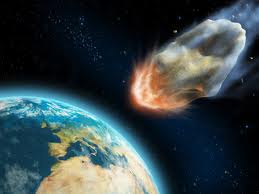
The Event: A large asteroid will hit planet Earth and the impact will cause worldwide devastation – including the possible extinction of most of the life on the planet.


The Impact: The amount of devastation will depend on how big the asteroid is and where it lands. Every day our planet is hit with small space objects (less than 10m in diameter) but most of these break up and/or burn up in our atmosphere turning into dust and ash, and don’t cause any damage. About once a year, a larger object enters the atmosphere but they almost always explode into small pieces (due to the rapid heating caused by friction with the air) and only a few are ever located. But on rare occasions, a large object will make it all the way to our surface and it will either explode in the air or hit the ground or water.

In 1908, a large explosion leveled a forest in Russia. The most plausible explanation is that a comet measuring 10 to 20 meters in diameter exploded in the air about 5 to 10 km above the ground. The explosion would have been about 1000 times more powerful than the atomic bomb dropped on Hiroshima. The area affected was over 2000 square kilometers and over 80 million trees were knocked over. Photos taken 20 years after the event show trees knocked down in a pattern suggesting a central explosion.


Elsewhere on our planet are the distinctive craters left when one of these objects actually make it to the ground. Here is a photo of one in Arizona. It measures 1100m wide and is 200m deep. Scientists estimate that this crater was created by a meteor measuring about 30m wide and weighing 100,000 tons.


One of the theories regarding the extinction of the dinosaurs is that a massive meteor hit the earth on the Yucatan Peninsula in Mexico (stay tuned for a series of posts about dinosaurs in a few weeks). The meteor has been estimated to be 10km in diameter, and created a crater more than 180km in diameter - most of which is under water. The impact would have created a megatsunami (a wave over 1000 feet high) and sent debris so high into the air it would have blocked sunlight and completely changed the global climate.


The Science: The development of telescopes over the past century has allowed us to see farther into space, but they have also allowed us to see smaller objects such as comets. We now understand that some of these comets have settled into orbits that are consistent and therefore predictable (such as the famous Halley’s comet which enters our solar system every 75 years). We also know that many space objects are unpredictable and the gravitational pull of the sun and other planets can change their trajectory so they could end up hitting earth. Between the planets Mars and Jupiter is a large collection of asteroids referred to as the asteroid belt. Most of the time, these asteroids orbit the sun in a stable orbit, but sometimes they collide with each other and pieces may have enough energy to leave the stable orbit and head towards the sun – which means they could get close to earth.


If you have ever looked at our moon with a telescope, you will have seen that the surface has many craters which are the result of meteor impacts. Since the moon does not have an atmosphere, or water, or active volcanoes, the surface doesn’t change so we have a good view of all the impact craters.


God has given us some built in protection against meteors. Our planet has an atmosphere surrounding it, which is a 100km thick layer of various gases held in place by gravity. While we tend to think of air as something with no mass, a strong wind will quickly remind us that air can do damage. As any object moves through our atmosphere, the air causes friction which creates heat. The faster an object moves, the more heat is produced. So when a meteor enters the earth’s atmosphere, it heats up very quickly. This rapid heating usually results in the meteor breaking into smaller pieces, which break into even smaller pieces, and many of these simply burn up and become fine dust. Maybe you have seen this for yourself watching the night sky – we call them shooting stars or falling stars.


Jac’s Analysis: In 1998, two movies were released about the possibility of a big comet heading towards earth. Deep Impact and Armageddon are reasonably accurate in their scientific explanation regarding how might react to a potential “earth killer” comet. In Deep Impact, one of the large fragments of the comet hits the ocean and creates a megatsunami. There is much devastation, but mankind survives. Outside of the world of fiction, spotting and tracking “near earth objects” or neos is on-going and so far, they haven’t found any objects heading our way that we need to worry about for the next century or so. We know from looking at the moon and different locations on earth, that big objects have been in our neighbourhood in the past, and will likely visit us sometime in the future. But based on the sheer volume of space (really, really big) and the relative small size of earth (pretty small), the odds of a large space object hitting us are truly astronomical.

Our Reaction? This event is unlikely, I don’t think we need to lose sleep over it. We need to trust that our God will continue to hold us in His hands and prevent this event from happening, or equip us to deal with it if it does.

Questions and comments?

1. Have you seen craters on the moon through a telescope? Have you seen “shooting stars”?
2. If you have watched Deep Impact or Armaggedon, do you think we are capable of deflecting a comet on a collision course with earth?

Next week we look at the final event – a deadly pandemic.

Jac

Monday, September 13, 2010

Fusion Energy

{Note: This post is #10 in a series of 12 where I review what Scientific American magazine has called the “12 Events That Will Change Everything”. See previous posts “Pacific Earthquake”, “Cloning of a Human”, “Machine Intelligence”, “Superconductors”, “Creation of Life”, “Nuclear Exchange”, “Extra Terrestrial Intelligence”, “Extra Dimensions”, “Polar Meltdown” and “False Dichotomy” for more information.}


The Event: Scientists will eventually be able to generate electricity by harnessing the same process that powers our sun – nuclear fusion. Hydrogen atoms will be fused into helium atoms under intense heat and pressure, releasing enormous amounts of energy with no emissions.


The Impact: The “fuel” needed for nuclear fusion is heavy hydrogen, which can be found abundantly in sea water. The end product is helium, which is an inert gas. The amount of energy released per gram of fuel is much higher than other forms of energy production. So, theoretically, nuclear fusion could become a very inexpensive way to generate electricity. This would satisfy our ever increasing desire for more energy and eliminate all sources of toxic emissions from other forms of energy production (such as burning coal, diesel, even nuclear fission waste).


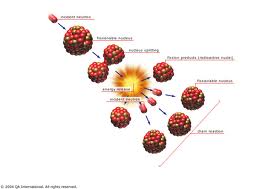
The Science: The nuclear power plants currently in operation use nuclear fission reactions – this means they take large, heavy atoms (like uranium) and split them into smaller atoms to release energy. This process is well understood and fairly economical so it has become quite popular world-wide (Ontario, Canada gets about 40% of its electricity from nuclear fission reactor power plants). The downside to nuclear fission is that the end products are highly radioactive so storage and disposal is difficult (the current policy is to safely store the waste indefinitely).


Nuclear fusion is the opposite of nuclear fission. A nuclear fusion reaction takes small, light-weight atoms (such as hydrogen) and fuses them into larger atoms (such as helium). This is how our sun works. It’s a very large ball of hydrogen gas – so large that the gravity has become so strong at the centre that the hydrogen atoms are fused into helium atoms which releases energy – heat, light, radiation – which keeps our planet warm and allows plants to grow.


God has crafted our sun with the right amount of hydrogen so the reaction is self-sustaining – meaning it will continue for a very long time emitting pretty much the same amount of energy it has always produced. If there was too much or too little hydrogen, our sun wouldn’t work – it would either burn out or explode.


Jac’s Analysis: Science has a great understanding about how nuclear fusion works. The problem is trying to re-create what the sun does on a much smaller scale. We have been able to start nuclear fusion reactions in laboratories, but we haven’t been able to create a self-sustaining reaction. The big problem is that in order to duplicate what goes on in the sun, we use high powered lasers to heat hydrogen atoms to the same temperature (or higher) as the core of the sun. No material can withstand this heat so to “hold” the hydrogen in place, they use strong magnetic fields. This works fine until the reaction starts, then we run into a problem – how do we get the helium out and add more hydrogen to the reaction at the correct speed so it stays stable? If you can figure that one out, you’ll win the Nobel Prize. I think this problem is almost impossible to solve, so I doubt we will see nuclear fusion power plants in my lifetime. The authors of the Scientific American magazine article agree with me on this – they rank this event as “very unlikely”.


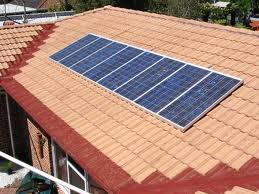
Our Reaction? Since this event is so unlikely, I don’t think we need to do anything – except continue to use less energy whenever possible and use renewable energy sources such as solar and wind.


Questions and comments?

  1. Do you understand the difference between nuclear fusion and nuclear fission? (If not, try Wikipedia or leave a comment)
  2. Did you realize that our sun is a ball of hydrogen gas with a nuclear reaction taking place at its core releasing heat, light and radiation? Isn’t it amazing how God made sure the sun had just the right amount of hydrogen so the reaction would be stable, and that He placed the sun the right distance away from us so it’s not too hot or too cold?


Next week we look at the potential of a doomsday event – a large asteroid impacting the earth.

Jac


Friday, September 3, 2010

Pacific Earthquake

{Note: This post is #9 in a series of 12 where I review what Scientific American magazine has called the “12 Events That Will Change Everything”. See previous posts “Cloning of a Human”, “Machine Intelligence”, “Superconductors”, “Creation of Life”, “Nuclear Exchange”, “Extra Terrestrial Intelligence”, “Extra Dimensions”, “Polar Meltdown” and “False Dichotomy” for more information.}

The Event: The US Geological Survey estimates California has a 99% chance of having a magnitude 6.7 earthquake before 2038. The earthquake in Haiti earlier this year was a magnitude 7.0.


The Impact: An earthquake of this magnitude in California would be big enough to disrupt utilities (gas, electric, water, sewer, communication), damage buildings, and collapse some bridges and overpasses. It is plausible for a larger one to occur causing even more damage, or potentially a tsunami. The fault line could shift as much as 13 metres which would severely impact roads, railways, waterways, and utilities. While there would be extensive damage to the infrastructure, California is fairly well prepared for an earthquake (due to previous quakes) and loss of life would be limited. Haiti was not prepared for an earthquake and over a quarter of a million people died as a result of that earthquake in January.


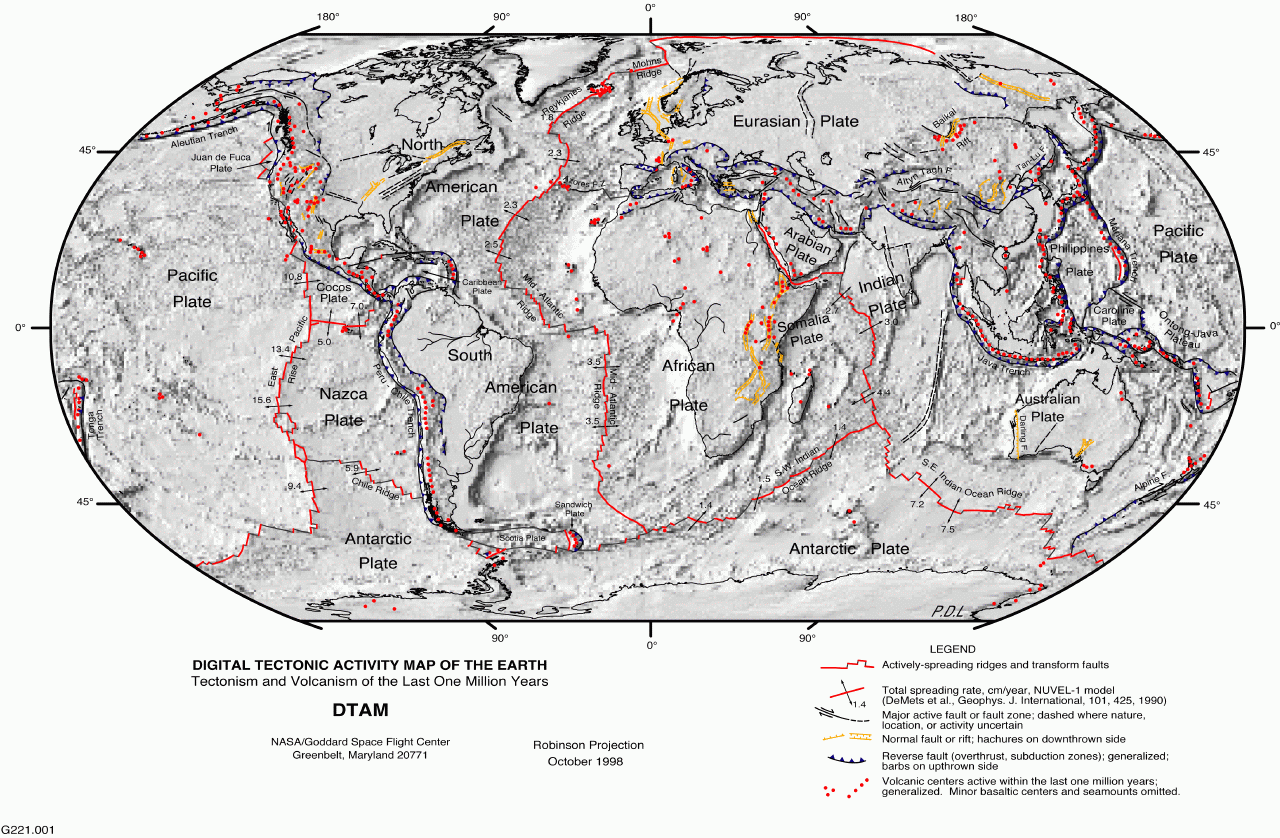
The Science: The earth is not a solid planet. The surface or crust is between 6km and 35km deep consisting primarily of rock with either soil or water on the top (the crust is thinner under the oceans). Underneath the crust is liquid magma (referred to as lava when it comes out of a volcano) which is essentially molten rock. So the surface is basically floating on a sea of magma. With the earth’s constant rotation, gravitational effects from the moon and sun, and the motion of the magma, there is a continuous force on the earth’s crust. While the crust may be mostly rock, there are weak points and over time, these weak points can’t resist the forces acting on them and they shift a little bit (or a lot). We refer to these weak points as fault lines and when we map the locations of the major fault lines over the planet, we can divide the earth into 7 or 8 major sections called tectonic plates. Most of the big earthquakes happen on or near these fault lines, one of which runs through California. There are about 100,000 earthquakes every year that are large enough to be felt – this gives you some idea regarding how unstable our surface actually is. Of these, only a handful are big enough to cause damage. A big earthquake tends to occur when the fault line hasn’t moved for a long time and the forces acting upon it have built up to the point where the fault “lets go” and significant movement results.


Jac’s Analysis: I agree that this event is very likely and anyone living in areas prone to earthquakes should take some precautions. Most people in developed countries that live in these areas have been advised on how to prepare for an earthquake and what to do when one occurs. This impacts building codes so that new or renovated buildings are designed to withstand quakes. Communities also have plans in place to assist with evacuations, providing food and water, etc. Individuals should have a “kit” ready with bottled water, non-perishable food, flashlights, etc. as earthquakes will often knock out power and communication lines.


Our Reaction? Where I live, the possibility of a major quake is very unlikely, so I’m not too concerned. And when I travel to the west coast of Canada or the US (not very often), I’m usually in newer hotels that have been built to withstand most earthquakes. I think our focus should be on those countries that are not able to prepare for a major quake (like Haiti) and try to figure out how we can help them by sharing our technology (building designs and retrofits) and responding to emergencies.


Questions and comments?

  1. Have you ever felt an earthquake? How did you react?
  2. Does this change your thoughts about how solid our planet is? Is the earth built on “firm foundations that cannot be moved” Psalm 104:5?


Next week we look at the promise of almost unlimited clean energy through nuclear fusion.


Jac